Recovery after amputation surgery has a goal that most other orthopaedic recoveries don’t share as directly: the shape of the residual limb affects how well a prosthetic will eventually fit. Swelling control isn’t just about comfort here, it’s part of the path to a good prosthetic outcome.
Why Does Even Compression Matter More Here?
Uneven swelling can leave a residual limb an irregular shape, which complicates prosthetic fitting later. Rehabilitation teams generally emphasize even, consistent compression in the early weeks, often using shrinker socks or wrapping techniques, specifically to help the limb settle into a stable, predictable shape sooner rather than later.
Is Below-Knee Recovery Different From Above-Knee?
Both share the same early priorities, wound care, swelling management, and gradual limb shaping, under your surgical and rehab team’s guidance. Above-knee recovery generally involves a longer overall rehabilitation arc before prosthetic fitting, since more muscle mass and a larger limb are involved.
Where Does Cold Therapy Fit?
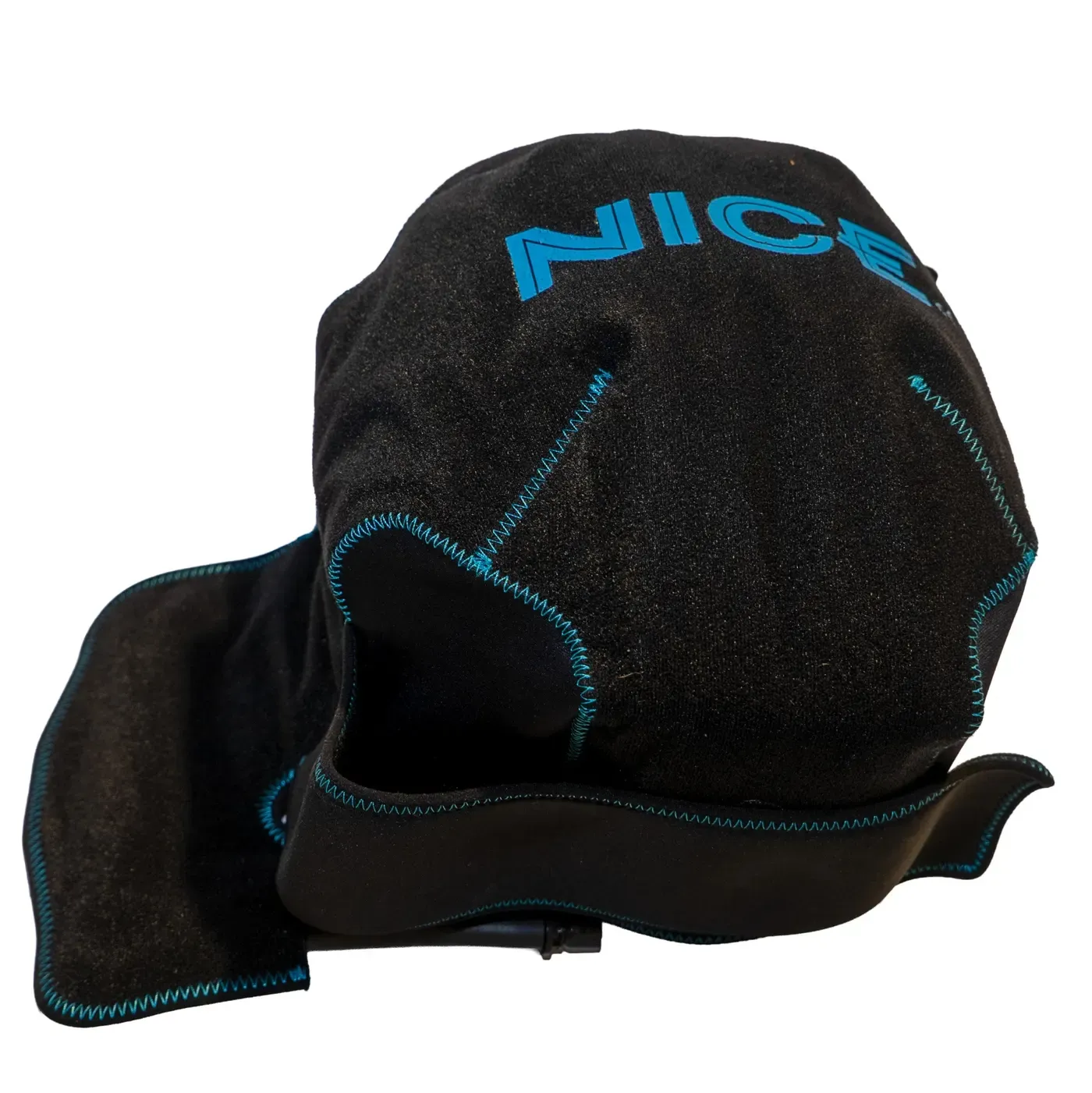
A standard flat ice pack doesn’t conform to a rounded, tapered residual limb, and even pressure is part of what matters here, not just cold. The NICE1 offers a purpose-made Leg Amputee wrap, along with a specialty Butterfly wrap, delivering circulating cold at a set temperature (42°F to 58°F) with even, adjustable compression (13, 26 or 39 mmHg) shaped to the limb rather than a flat pad laid over it.
The amputee rental page has wrap details and pricing, and the full specification covers the exact settings.