
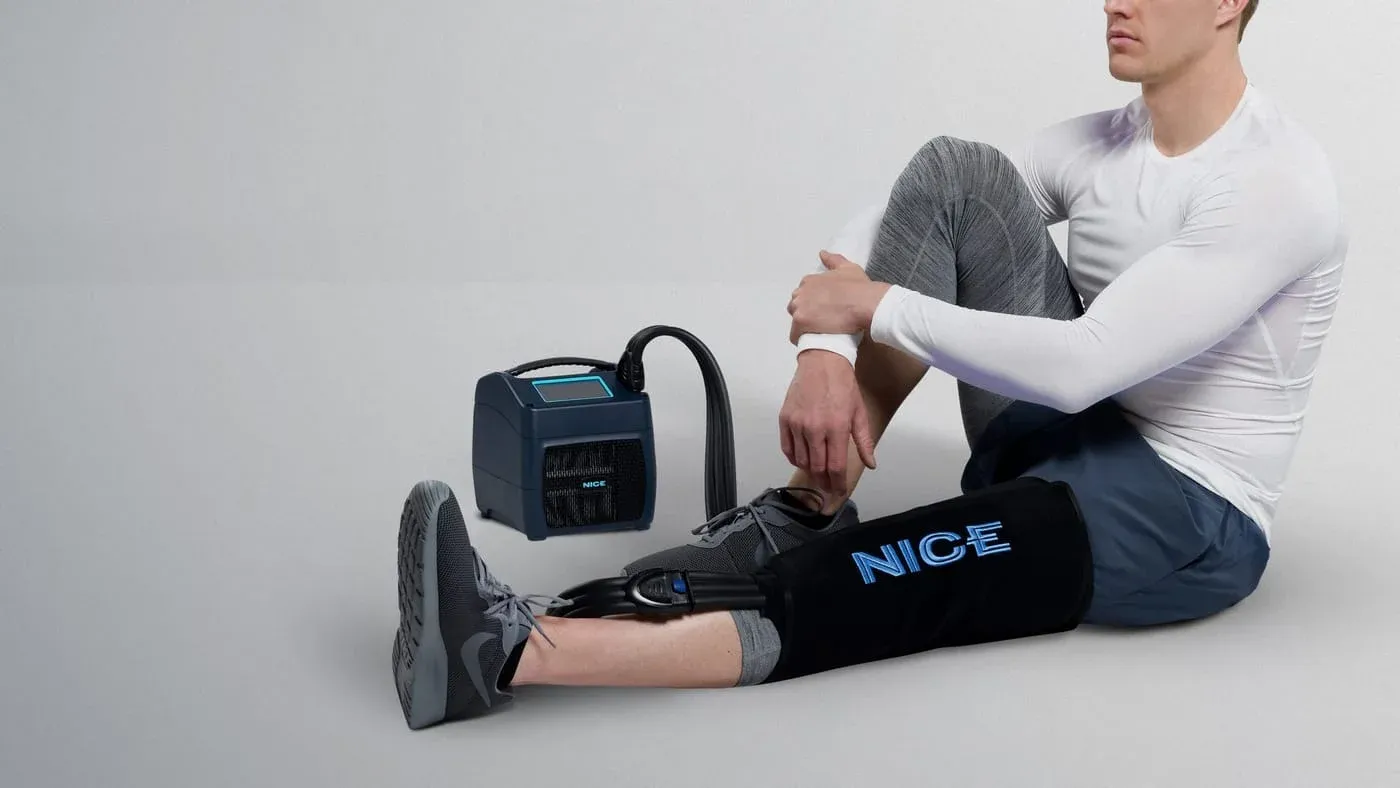
If you’re a few days from a knee surgery and trying to decide whether a cold therapy machine is worth it, the honest answer starts with what the clinical trials actually measured, not what a product page claims.
Knee replacement: the best-studied procedure
Total knee arthroplasty (knee replacement) has the most cryotherapy research of any procedure covered here. A 2024 systematic review and meta-analysis pooling 31 randomized controlled trials found that cryotherapy in general, compared to no cryotherapy, reduced pain scores in the first three days after surgery, reduced opioid use, reduced blood loss, and improved knee range of motion.
The same review then isolated a narrower question: do continuous cold-flow devices (the kind that circulate chilled water through a wrap) outperform simple cold packs? On pain, opioid use, blood loss, range of motion, and swelling, it found no significant difference.
A separate 2023 review focused specifically on swelling, covering 8 trials, reached a similar conclusion, most of the included studies found no significant difference in swelling between device-based cooling and manual ice. An earlier review of knee replacement trials found cryotherapy significantly reduced opioid use in the first postoperative week, and suggested that device-based cooling may strengthen that effect compared to ice packs, while finding no consistent benefit to range of motion or swelling at any time point measured. Not every study agrees: a smaller prospective study did find a device advantage, a significant difference in swelling on day one and in range of motion at several later points, so “no difference” isn’t a universal finding either.
ACL reconstruction: a thinner, less consistent evidence base
A 2025 review covering 9 randomized trials and over 500 ACL reconstruction patients described the overall evidence as inconsistent, citing substantial variation across studies in cryotherapy protocols, outcome measures and follow-up periods. That doesn’t mean cold therapy doesn’t help after ACL surgery, it means the trials haven’t been standardized enough to draw a confident conclusion either way.
An earlier, smaller meta-analysis of 10 ACL trials covering 573 patients did find a significant reduction in pain scores 48 hours after surgery with cold compression devices compared to no cryotherapy, with no difference in adverse events between groups.
Meniscus and other knee procedures
Meniscus repair and other knee arthroscopy procedures don’t have the same depth of dedicated cryotherapy trials as knee replacement or ACL reconstruction. Where cold therapy guidance exists for these procedures, it tends to extrapolate from the broader knee-surgery evidence above rather than from procedure-specific trials, worth keeping in mind if you’re researching a specific surgery type.
Reading this evidence honestly
Two things are true at once in this research. First, cryotherapy as a category, any form of it, has real evidence behind it for pain and opioid use in the early days after knee surgery. Second, the specific claim that a powered machine clinically outperforms a cold pack is not well supported by the higher-quality reviews, most found comparable outcomes, with a minority of individual studies favoring the device.
What the trials generally don’t measure is adherence, whether the cold therapy plan written on your discharge paperwork actually happens every session, at the intended temperature, for however many weeks your surgeon specified. That’s a separate, practical question from clinical efficacy, and it’s the one most patients are actually solving for. If that’s what you’re weighing, the rental page covers how a machine handles that logistics question day to day.
Sources referenced above: Cryotherapy for Rehabilitation After Total Knee Arthroplasty: A Systematic Review and Meta-Analysis (2024), Effectiveness and Methods of Cryotherapy in Reducing Swelling After Total Knee Arthroplasty (2023)