
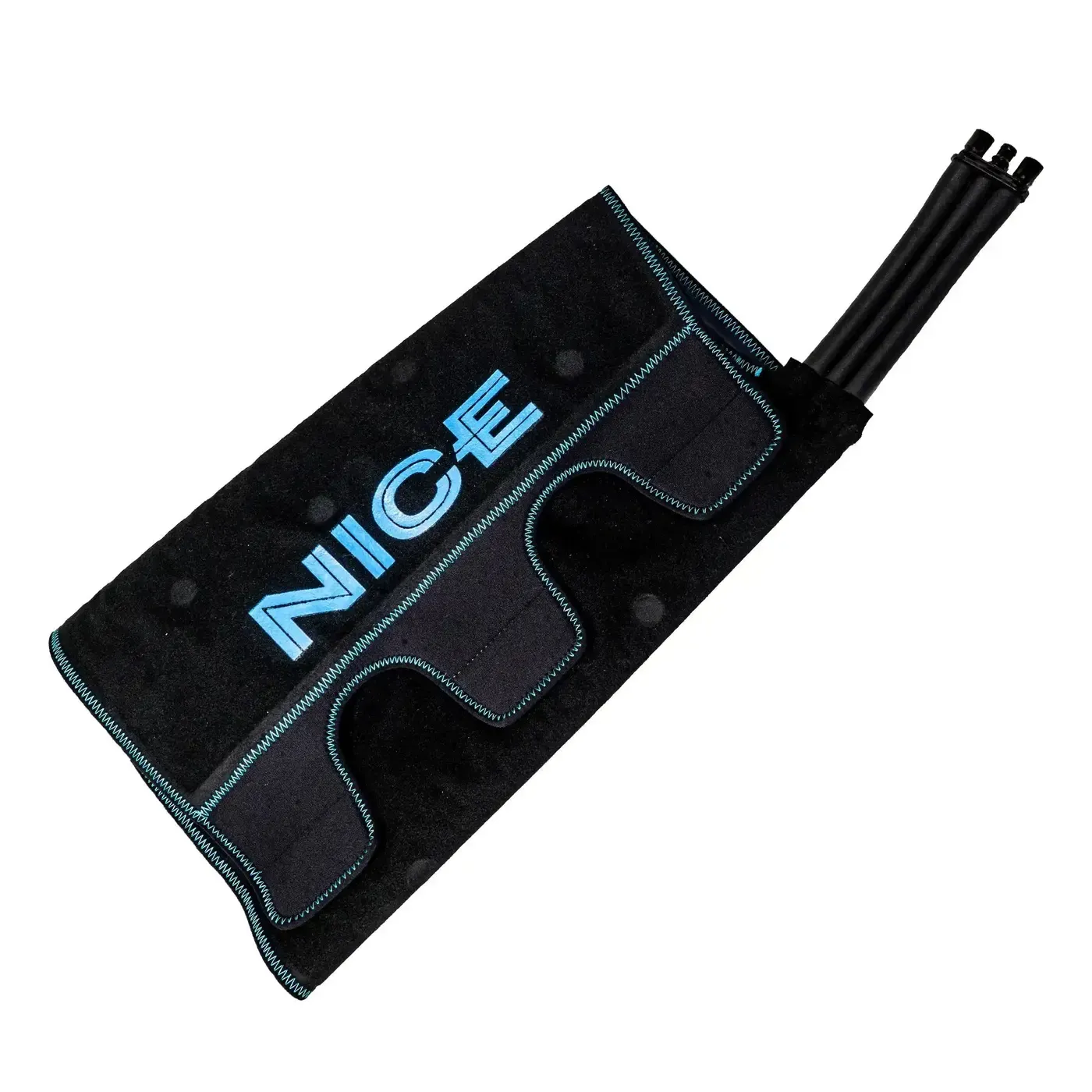
“Best ice machine for knee replacement” is a fair question to type into a search bar. It’s also, based on the actual research, the wrong question to lead with. The literature doesn’t rank products, it studies an intervention: does cooling the knee after a total knee replacement help, and if so, with what, exactly?
Here’s what the evidence says, and what’s still unsettled.
What the research actually measured
A 2024 systematic review and meta-analysis pooled 31 randomized controlled trials on cryotherapy after total knee arthroplasty. The headline findings: cryotherapy lowered pain scores on postoperative days one to three compared with no cold therapy, and the pooled data also favoured cryotherapy for opioid use, hemoglobin loss, surgical drainage, and range of motion.
That’s a genuinely positive result for an intervention this simple and low-risk. It’s also worth reading the fine print: the pain difference across the pooled trials was modest, roughly six to nine tenths of a point on a ten-point scale. Real, but not dramatic.
Where cryotherapy clearly helps
The most consistent finding across individual trials, not just the pooled analysis, is reduced opioid use in the first week after surgery. A 2018 trial comparing a cold setting (10 to 12°C) against a warm setting (21°C) found the cold group used fewer opioids over four days, with both groups reporting less pain after each session. A separate computer-assisted cryotherapy trial found the same pattern: less pain and lower opioid use early on.
A later review of the opioid-specific literature drew a careful conclusion: the opioid-sparing effect is concentrated in the first postoperative week, and while statistically real, the accompanying pain reduction may not always be large enough for a patient to notice as clinically meaningful. That’s an honest caveat worth sitting with, not every positive trial result translates to something you’d feel.
Where the evidence is thinner
Two things the research does not clearly support:
That machines beat cold packs. The 2024 meta-analysis specifically compared continuous cold-flow devices against traditional ice packs and found the devices did not outperform packs on the outcomes measured. That doesn’t mean machines are pointless, see the next section, but it means “the machine is colder or more effective” isn’t the claim the evidence backs.
That cold therapy meaningfully changes swelling or short-term range of motion. Several individual trials, including the 2018 temperature-comparison study and a computer-assisted cryotherapy RCT, found no significant difference in swelling between groups. The pooled meta-analysis leaned favourable on range of motion overall, but it’s a less consistent finding across the individual studies than the pain and opioid results.
What the evidence suggests matters in a device
If the physiological effect of cold itself is roughly equivalent between a well-managed ice pack routine and a machine, the honest case for a machine isn’t a bigger effect, it’s consistency of execution. The research protocols that produced these results specified a temperature and a schedule and held to it for days. That’s exactly where a bag of ice, which starts cold and warms within twenty minutes, struggles, and exactly where a device that holds a set temperature for a full session doesn’t.
Based on what the studies actually controlled for, three things are worth asking about any device: does it hold a genuinely consistent temperature for the full session, does it combine cold with compression (several of the trials’ protocols did), and can you realistically keep the protocol going for the days the evidence says it matters, not just the first one.
Sources
- Cryotherapy for Rehabilitation After Total Knee Arthroplasty: A Comprehensive Systematic Review and Meta-Analysis (2024, 31 pooled RCTs)
- Randomized trial comparing cold-setting (10–12°C) vs. warm-setting (21°C) cryotherapy after TKA, 2018
- Computer-assisted cryotherapy RCT, postoperative TKA recovery, 2021–2022
- Review of opioid-sparing outcomes in post-TKA cryotherapy literature
If your plan calls for consistent cold and compression after surgery, the rental page explains how the NICE1 executes it, five held temperatures, three compression levels, and one cup of water for the whole recovery.