
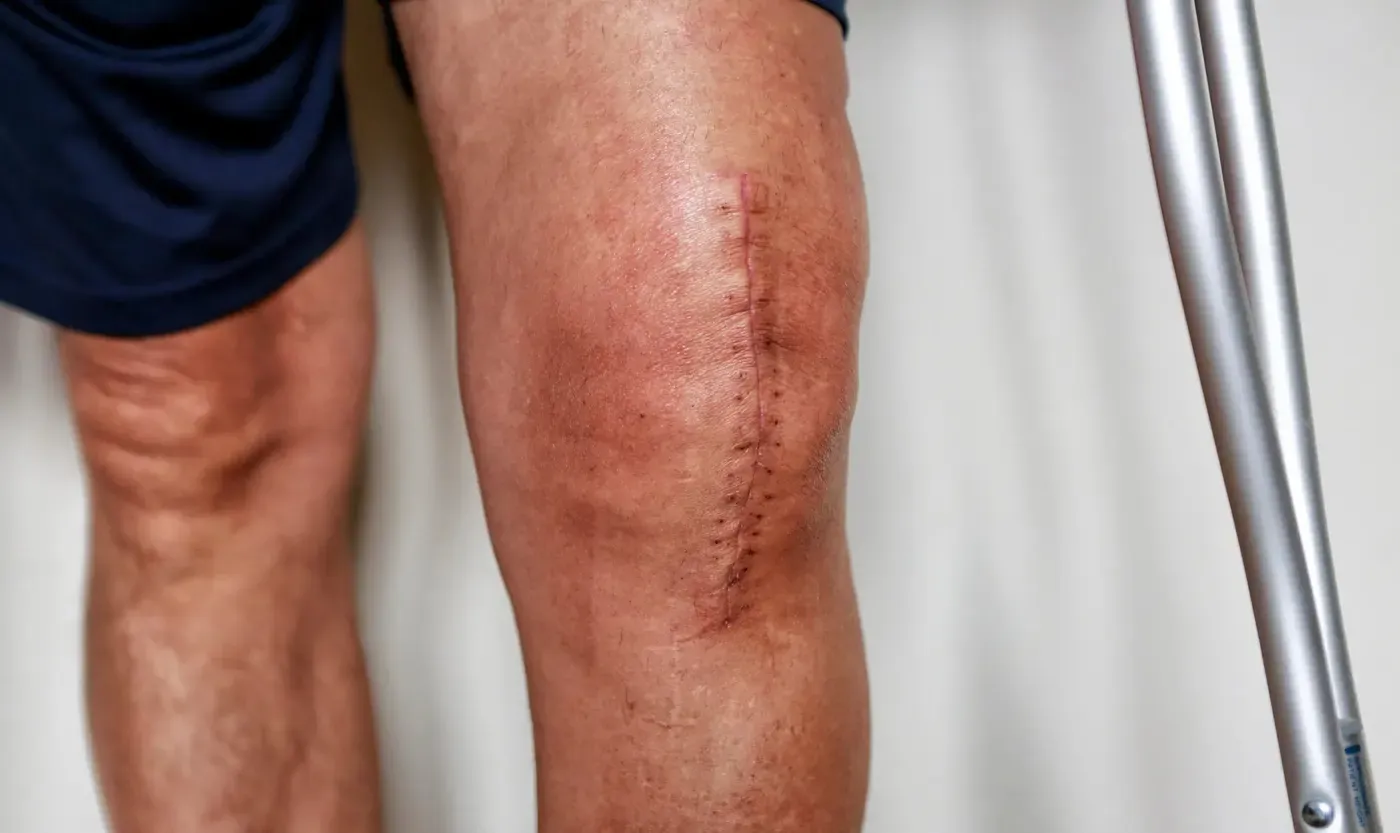
“Keep it elevated and iced” is the advice most people leave the hospital with. It’s not wrong, but it’s incomplete, and it understates how much the type of compression used actually matters in the trials that have tested this. Here’s what the clinical evidence specifically shows.
Compression is the best-supported piece
A 2020 systematic review pooling 15 eligible trials on post-surgical compression found that not all compression methods performed equally. Multilayer and long-stretch compression were the modalities that showed a statistically significant reduction in edema; other approaches tested in the same review didn’t clear that bar as consistently.
A separate systematic review focused on ankle fracture surgery, eight studies covering 451 patients, found that seven of the eight studies showed a significant effect on edema from compression. The review’s authors were careful to note that methodological limitations in the underlying studies meant firm conclusions about downstream outcomes, like wound healing or hospital length of stay, weren’t yet possible, even though the swelling effect itself looked real.
How long compression should run
One randomized trial on knee arthroscopy patients found that compression stockings reduced limb swelling compared with no stockings in the early days after surgery. The trial authors suggested the benefit window runs roughly three to ten days post-op, a reasonable general range, though your own surgeon’s protocol is the one that should actually guide you.
Not every compression method shows the same result
This is where the evidence gets more nuanced than “compress it and you’re done.” A pilot study on thigh-length compression after total knee arthroplasty found a possible benefit that didn’t reach statistical significance, the authors suggested a larger trial with stricter compliance would be needed to settle it either way. A different study testing a pneumatic compression sock for ankle swelling found no significant reduction, notably, that device was tested on its own, without elevation or cold applied alongside it, which may partly explain the weaker result.
The pattern across these studies: the type and consistency of compression matters, not just whether a device is technically “compression.”
Where elevation and cold fit in
Elevation and cold therapy are standard components of most post-surgical swelling protocols, and the physiological reasoning behind both, reducing hydrostatic pressure and local blood flow to the area, is well established. They’re tested less often than compression in large, rigorous surgical trials specifically isolating their individual effect on swelling, which makes them harder to cite a single clean statistic for. That’s a gap in the research, not evidence against them, most surgical teams include both for good physiological reasons even where the trial base is thinner than compression’s.
The honest summary
- Compression, specifically multilayer or long-stretch, has the most consistent trial support for reducing post-surgical swelling.
- Timing matters: benefit windows in the research cluster around the first several days to roughly a week and a half post-op.
- Not all compression devices are interchangeable in the evidence, how a method was tested (alone vs. combined with elevation and cold) appears to affect the result.
- Elevation and cold remain standard, sensible care, even where large trials isolating their individual swelling-reduction effect are less common than for compression.
If your recovery plan calls for consistent compression alongside cold, the rental page explains how that’s set up at home.
Sources referenced: a 2020 systematic review of post-surgical compression trials (15 studies); a systematic review of compression after ankle fracture surgery (eight studies, 451 patients); a randomized trial of compression stockings after knee arthroscopy; and a pilot study on thigh compression after total knee arthroplasty.