
Three products get recommended for knee surgery recovery: a bag of frozen peas, a cryo cuff, and a powered cold and compression machine. They aren’t interchangeable. Here’s what each one actually does, honestly, so the choice is about your recovery, not the shelf you grabbed from.
The three options, side by side
| Ice pack | Cryo cuff | Cold therapy machine (NICE1) | |
|---|---|---|---|
| How it cools | Frozen gel or ice, straight from the freezer | Ice water in a cooler, gravity-fed to a wrap | Chills its own water electronically |
| Holds a set temperature | No, warms immediately | No, warms as the ice melts | Yes, 5 settings, 42–58°F |
| Needs ice | Yes, refreeze between uses | Yes, refill every few hours | No, 1 cup of water for the whole rental |
| Compression | None | None, most models | 3 levels: 13, 26, 39 mmHg |
| Typical session | 15–20 minutes before it warms up | 1–2 hours before a refill | As long as your care plan calls for |
| Cost | Lowest, one-time purchase | Mid, one-time purchase | $300/week (CAD), rented |
Do Ice Packs Work Well Enough?
A frozen gel pack is fine for a quick top-up between sessions or when you’re away from your main setup. Its ceiling is physics: it starts cold and ends at room temperature, usually within 15 to 20 minutes, then it’s just a damp bag strapped to your knee. For the deep swelling of the first two to six weeks after surgery, that means getting up to swap packs every session, which is exactly the kind of thing a recovering knee doesn’t want to do.
Are Cryo Cuffs Better Than Ice Packs?
A cryo cuff solves the shape problem, an insulated wrap that actually surrounds the joint, fed by a cooler of ice water sitting beside you. It holds cold longer than a gel pack, but the mechanism is the same: ice melts, the water warms, and every few hours someone refills the cooler with more ice. There’s no way to dial in a specific temperature, and almost no cryo cuff adds compression, which is the second half of what actually reduces post-surgical swelling.
What Makes a Cold Therapy Machine Different?
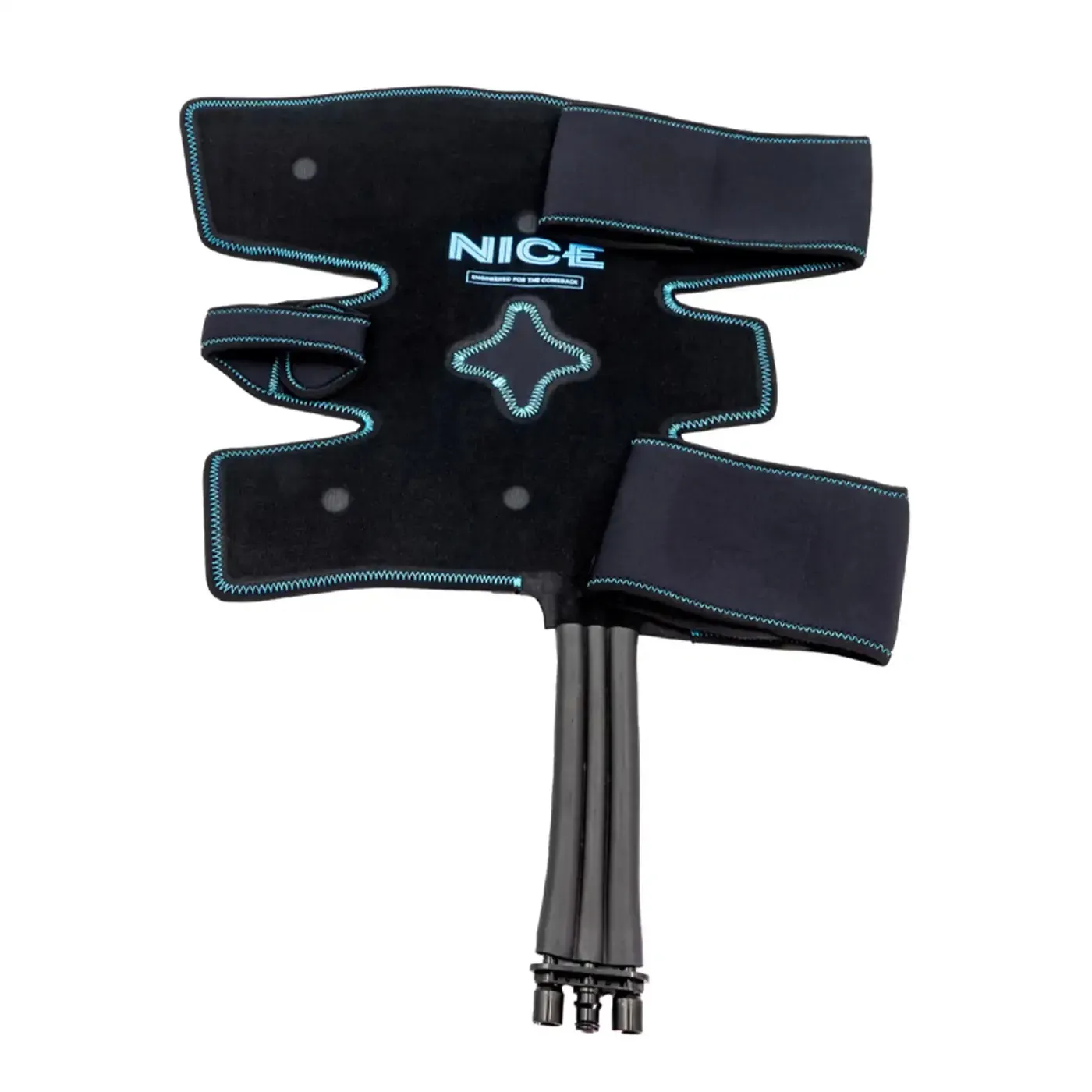
The NICE1 replaces the ice entirely. It’s a small electric unit that chills its own water and holds whichever of its 5 settings you pick, from 42°F to 58°F, for the length of the session, not the length of the ice. It uses one cup of water for the entire rental, no bags of ice, no coolers to refill. It also runs compression alongside the cold, 13, 26 or 39 mmHg, which a frozen-water setup can’t do at all. The tradeoff is cost: it’s a weekly rental rather than a one-time purchase, delivered to your home two days before your surgery date and picked up when you’re done.
Which One Fits Your Recovery?
- A day trip or backup option: an ice pack is fine, nobody’s renting a machine for an afternoon.
- A few weeks, budget matters more than convenience: a cryo cuff is a reasonable middle ground, as long as refilling ice on schedule is realistic for your household.
- The first weeks after surgery, when consistent temperature and compression matter most: a cold therapy machine removes the ice-management problem entirely and adds compression on top.
The full NICE1 specification has the exact settings and numbers, and the knee rental page covers pricing, delivery timing and what’s included.